

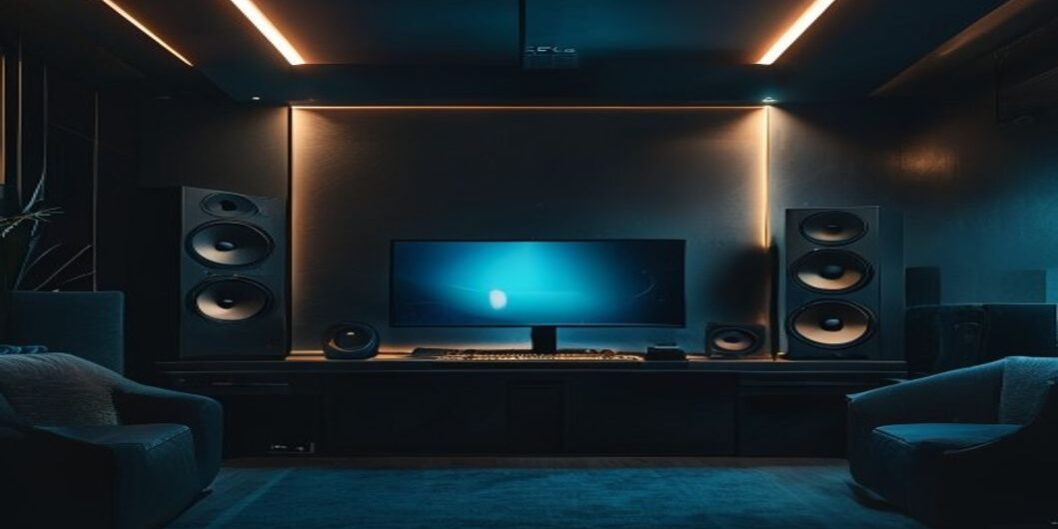
How to Measure Room Acoustics Yourself: Applications and Methods
An acoustics self-measurement application is a complex task that requires an understanding of the physics of sound and its interaction with the environment. Room errors are an order of magnitude larger than electronic errors, as confirmed by research by Tool and Olive (Toole, JAES). In our projects we use our own active 3-way Payos Audio Main Control monitors for precise measurements and sound analysis.
What methods are used to measure room acoustics?
One of the most common methods is the use of impulse response (Dirac function), which allows for a complete correlation between objective measurements and subjective perception. Another popular method is the standard Thiel-Small method (1965), which uses sine signals, but its efficiency is limited to 1.5-5%.
What is 3D room scanning and how is it used in acoustics?
3D scanning of a room is the basis for calculating the acoustic parameters of a space. This method allows you to obtain accurate information about the geometry and dimensions of the room, which is necessary for designing and optimizing the acoustic system.
What role does sound direction play in room acoustics?
The direction of sound plays a significant role in the acoustics of a room. Controlled directivity improves intelligibility and reduces audible reflections, as confirmed by research from Kii Audio (Putzeys). However, as some researchers note, directionality is not the only factor influencing sound quality.
Frequently asked questions
What is the difference between measuring room acoustics and measuring electronics?
Room errors are orders of magnitude larger than electronic errors, which exceeds the measurement capabilities of the electronics.
What methods are used to measure room acoustics?
Impulse response (Dirac function), standard Thiel-Small method and 3D room scanning.
What is 3D room scanning and how is it used in acoustics?
3D scanning of a room is the basis for calculating the acoustic parameters of a space, necessary for designing and optimizing an acoustic system.
What role does sound direction play in room acoustics?
Sound directionality improves intelligibility and reduces audible reflections, but is not the only factor affecting sound quality.
If you want to improve the sound in your space, contact us at 360° Space Acoustic. Our team of experienced professionals will help you find the best solution for your needs and ensure high quality sound in your room.
Need acoustics advice?
Leave your contact — we'll respond within 30 minutes and calculate the cost